Country
New Zealand
Agricultural Area
110 ha
About ERS
- Lead: DairyNZ Ltd - DNZ
- Contact: Jane Kay and Mark Neal
- Production System: Pasture-based dairy production system with two comparable herds (benchmark and mitigation)
Thematic Areas Covered

Additives for Reducing Enteric Methane Emissions

Forage Production

Grassland Management

Herd Management
Description
DairyNZ is partnering with Dairy Trust Taranaki (DTT) to bring DTT’s Gibson Farm into the programme as New Zealand’s Pioneer ERS (PionERS).
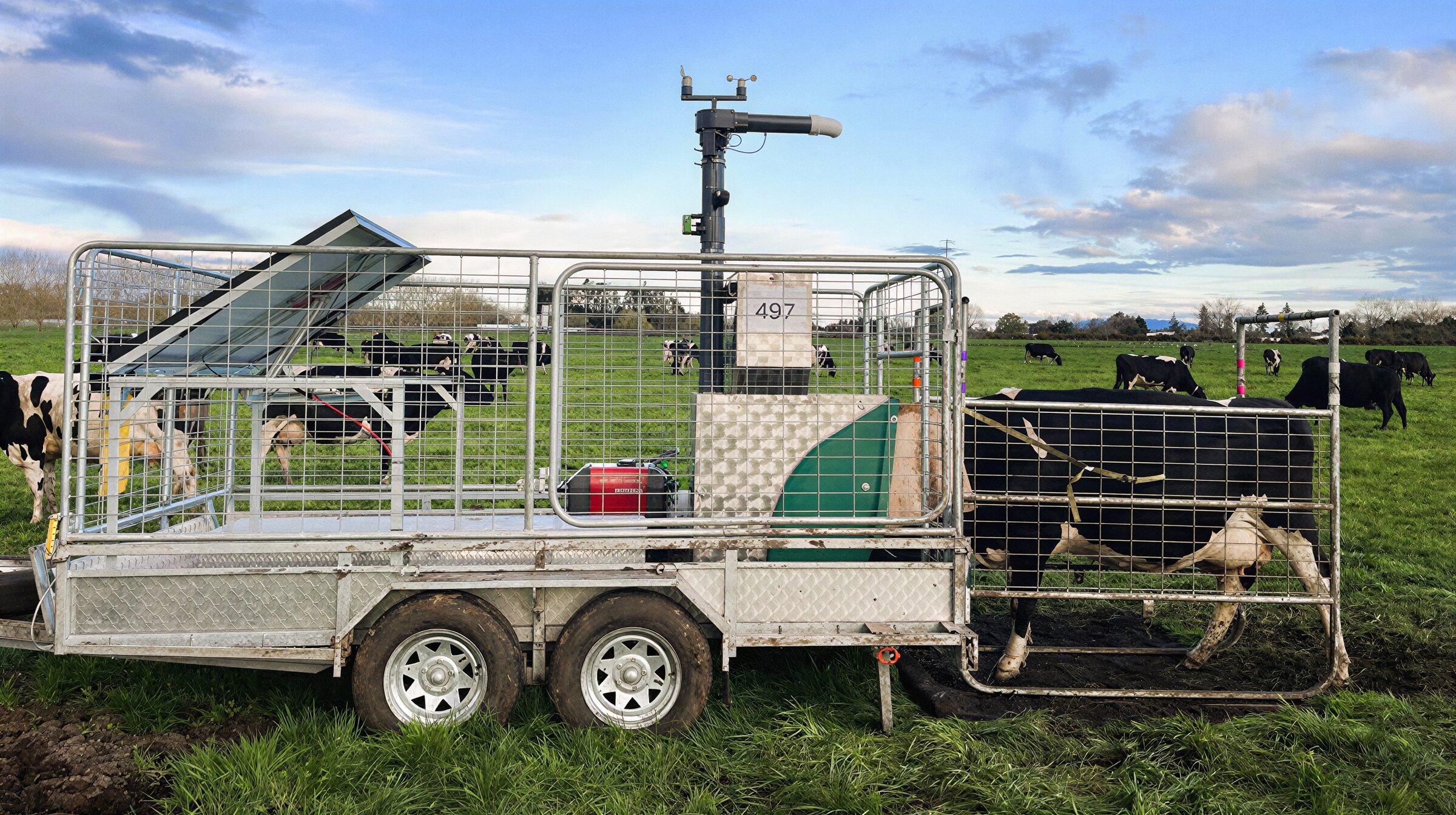
Gibson Farm is a 110-hectare working dairy farm in Taranaki on the west coast of the North Island. It is currently host to a project evaluating viable, scalable mitigation strategies within pasture-based systems.
Over the past five years, DTT and DairyNZ have compared a typical “current” herd with a “future” herd that adopted potential mitigation strategies including reduced nitrogen fertiliser, diverse pastures, and strategic supplementary feeding. These mitigations lowered total and intensity-based methane emissions, maintained profitability, but reduced milk production.
The next phase as a PionERS will focus on reducing methane and nitrogen surplus while improving production and profit. This will leverage DairyNZ’s wider greenhouse gas research outcomes and, where possible, integrate adoptable technologies to demonstrate efficient, profitable, low-emissions dairy farming.
Characteristics
DairyNZ and Dairy Trust Taranaki are farmer-focused, science-based organisations committed to delivering practical solutions that support a positive future for NZ dairy farmers.
Our work applies a whole-farm systems lens, ensuring mitigation strategies are viable and scalable under real pasture-based farming conditions, with outputs aligned to evolving market drivers and global sustainability targets. This approach keeps farmers at the core while considering future adaptation, economic viability, animal wellbeing, and wider environmental risks.
The PioneERS provides a valuable platform for farmer and stakeholder engagement, representing a typical New Zealand dairy farm where cows graze outdoors every day and home-grown feed (pasture and crops) makes up at least 80% of the cows’ diet. It creates opportunities for meaningful interaction, shared learning, and practical demonstration of how integrated farm-system practices and emerging technologies can reduce GHG emissions while delivering balanced, holistic outcomes.